Every job below is one we do ourselves across Brookhaven.
We dig and pour footings below the frost line, then frame with joists sized for the actual span instead of whatever's left on the truck. Posts get set in concrete, not just set in dirt and tamped. Most installs run two to three weeks depending on size and whether the county inspector can get out quickly.
Some decks need to wrap around a corner, drop down to a lower patio, or carry a pergola on top, and that changes the framing before a single board goes down. We'll draw it out, price the options, and tell you honestly if a design needs bigger beams or extra footings. A deck that looks good on paper still has to hold up a hot tub.
Soft spots in the decking usually mean the joists underneath have started to rot, not just the boards you can see. We sister new lumber alongside failing joists instead of just swapping the top boards and calling it fixed. Loose railings almost always trace back to a post that was never bolted through the rim joist in the first place.
We pressure wash first, let the wood dry out for a couple of days, then sand down rough spots before any stain goes on. A solid stain hides more but a semi-transparent one lets the grain show, and we'll tell you which one your wood can still take. Plan on redoing this every two to three years in this climate, sooner if the deck gets full sun all day.
When the frame's too far gone to repair, we tear off the old decking and look hard at what's underneath before deciding what to keep. Footings that are still solid and sized right get reused, which saves you money over a full rebuild. Anything with rot in the post bases or an undersized beam gets replaced, no matter what it adds to the quote.
Composite boards don't need staining, but they still need the frame underneath done right, hidden fasteners, and gaps left for heat expansion. We've installed enough of it to know which brands hold their color and which ones chalk out after a few summers. It costs more upfront than pressure-treated pine and skips the re-staining cycle entirely.
Code around here calls for 36 inch rail height and balusters spaced so a 4 inch sphere can't pass through, and we build to that whether it's wood, cable or aluminum. A wobbly railing is almost always a post that was toe-nailed instead of through-bolted to the frame. We'll fix the one loose section or replace the whole run, depending on what the rest of it looks like underneath.
A screened porch ties into the house roofline, which means flashing it right matters as much as the framing. We frame the screen panels so they can take a storm without bowing, and we'll run a ceiling fan box in while the framing's still open. It keeps the bugs and the pollen out without closing in the whole backyard.
This is the part nobody sees once the boards are down, the ledger board flashing, the joist hangers, the beam carrying the whole load. A ledger that wasn't flashed when the house was built is the single biggest reason decks fail here, long before the decking itself wears out. We open up the rim joist, check it, and fix it properly instead of just bolting a new board over the rot.
A pergola adds shade without blocking the whole deck off, and it needs its own footings if it's not tied straight into the house framing. Cedar weathers to a silver gray on its own if you don't want to keep up with staining it. Covered decks need a roof tie-in done right so water doesn't end up running behind your siding instead of off the edge.
Four steps, and no surprises in any of them.
You tell us what you want doing, we look at what is actually there, and we ask the awkward questions early.
In writing, itemised, free. If something might add cost later we flag it now rather than at the end.
Same crew throughout. We cover your floors, keep the dust down and tidy up before we leave each day.
You point out anything you are not happy with and we fix it before the invoice, not after.
A few decks finished recently around Brookhaven and nearby.
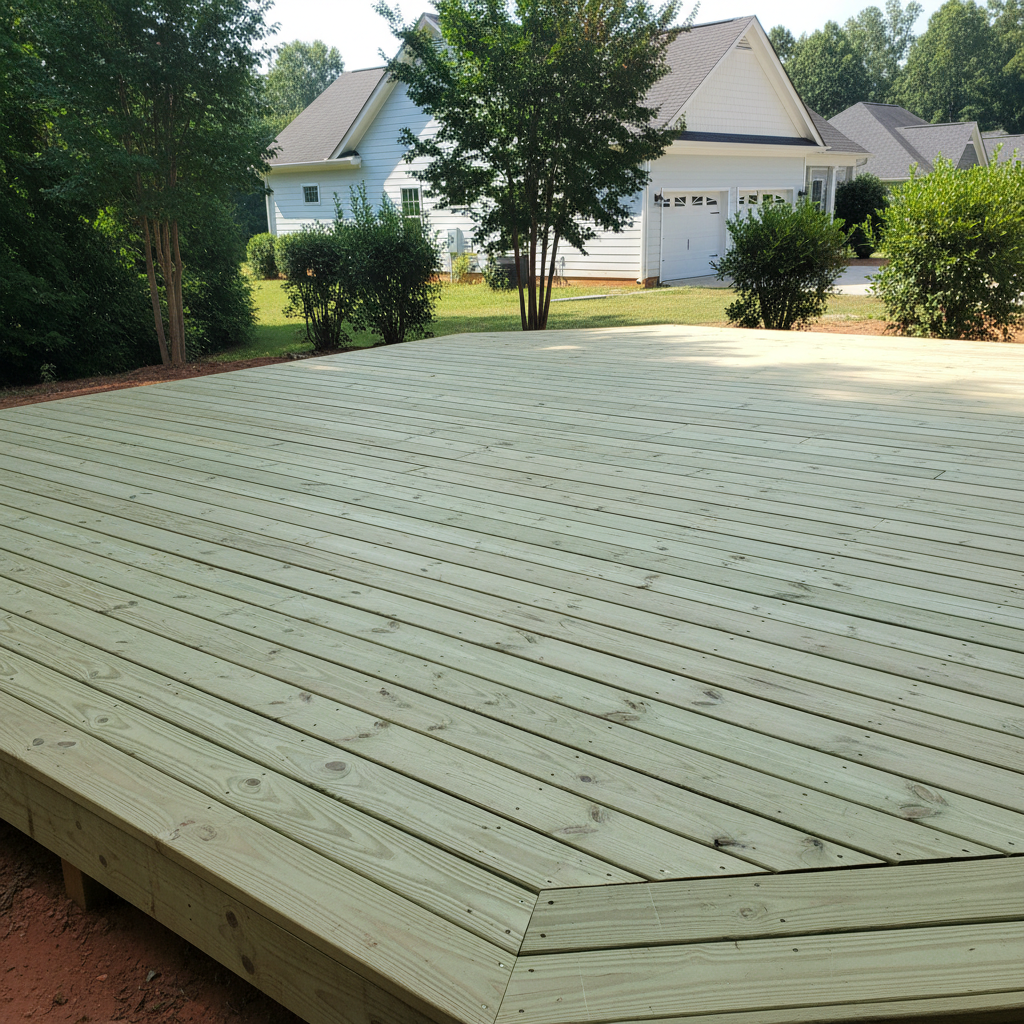
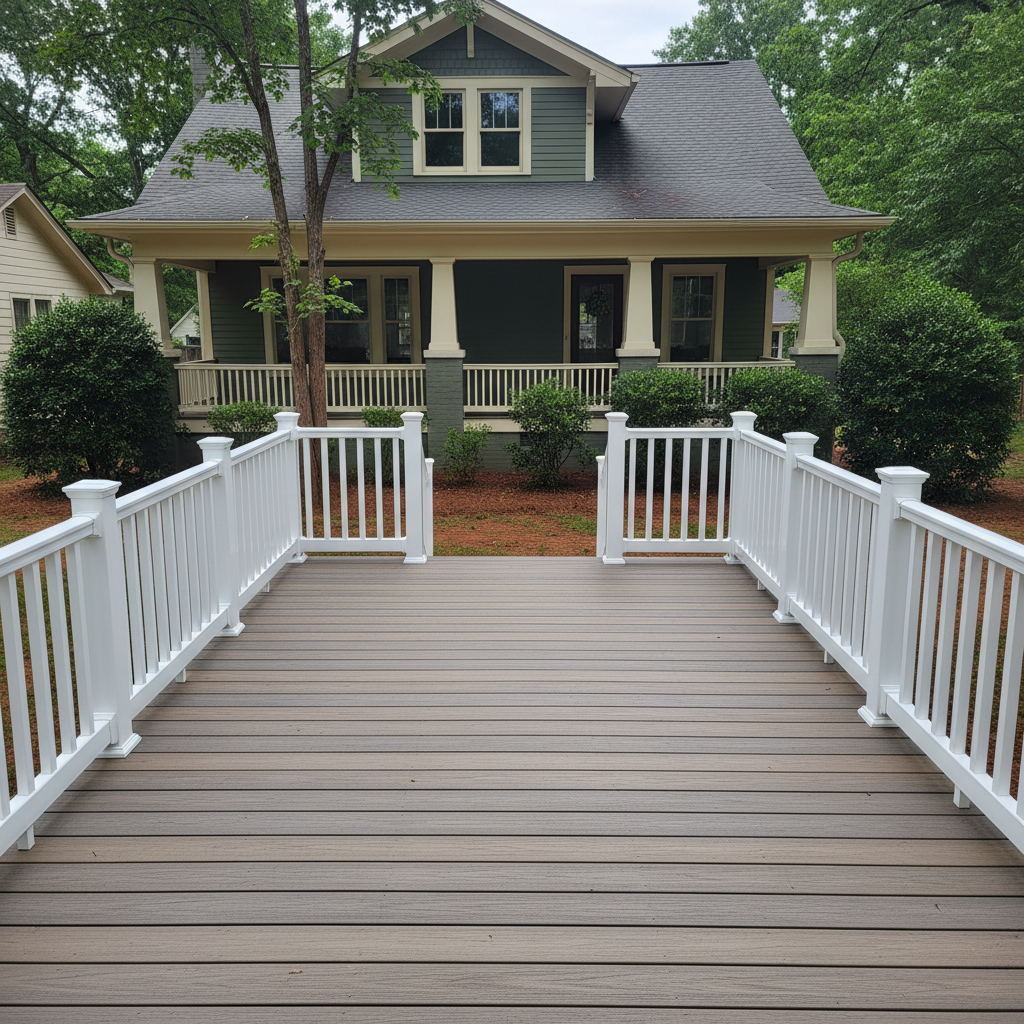
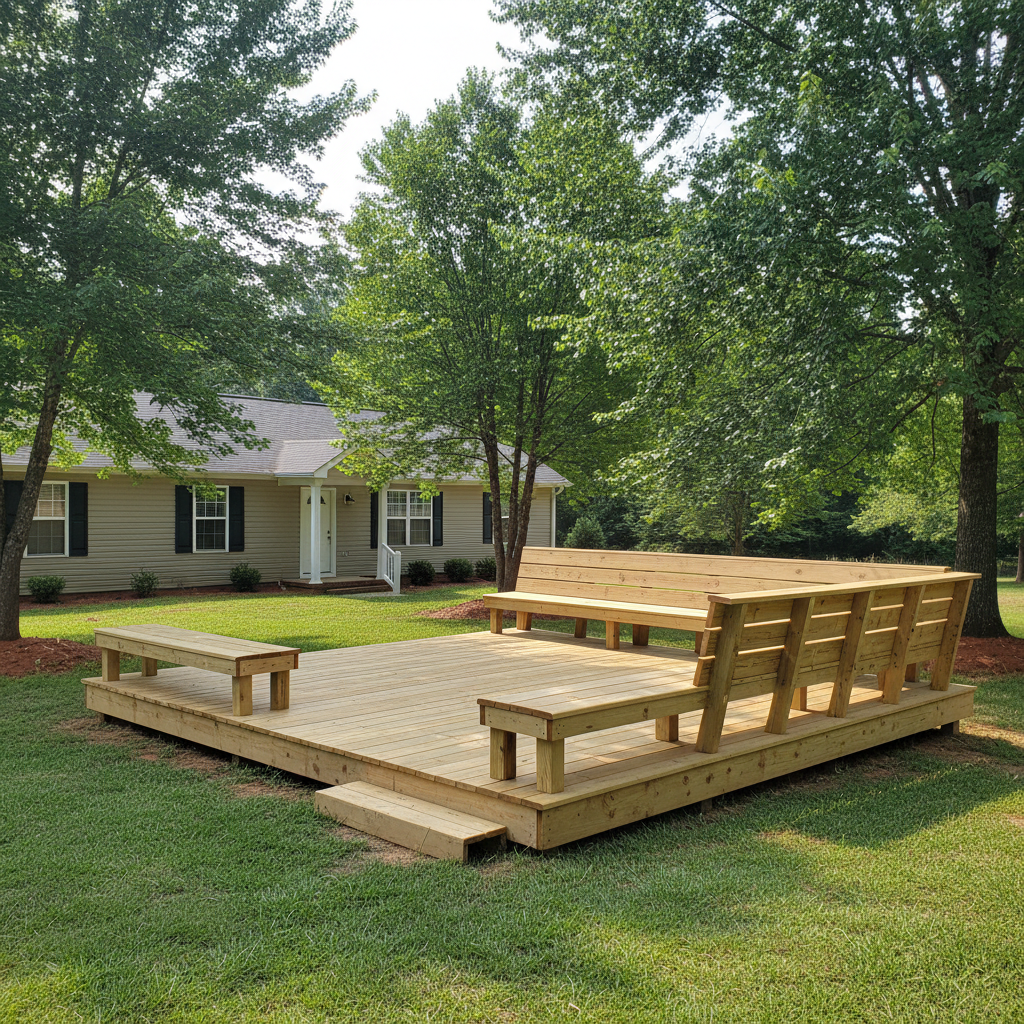
This is the ground covered for deck builds, repairs and staining work.
What tends to come up once a deck project actually gets underway.
Describe the problem and we will tell you what it probably is. No obligation.